

Mobile Mechanic Versus Dealership: Which Wins?

How to Remap a Diesel Van Without Guesswork
July 17, 2026
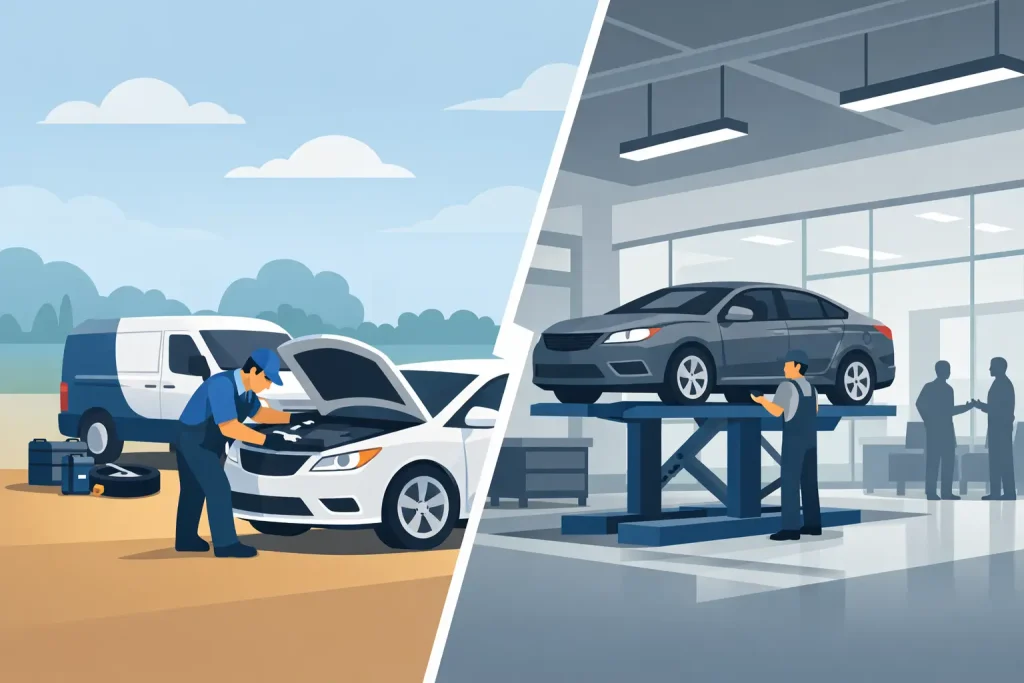
A dashboard warning is one thing. A countdown telling you the engine will not restart in 500 miles is another. When your diesel is in limp mode, your van is due on site, or a dealer has quoted four figures for an AdBlue tank, the mobile mechanic versus dealership question stops being theoretical. You need the vehicle fixed properly, without wasting a week and a small fortune.
The honest answer is that both have a place. A main dealer can be the right call for manufacturer warranty work, recalls and certain complex factory issues. But for many out-of-warranty diesel faults, particularly AdBlue, NOx sensor and emissions-system problems, a capable mobile diagnostic specialist can be faster, more convenient and far better value.
Mobile mechanic versus dealership: the real difference
The biggest difference is not just where the work happens. It is how the problem is approached.
A dealership works within the manufacturer system. That brings access to factory procedures, official software and parts channels. It also means fixed labour rates, booking queues and a common preference for replacing the component identified by the diagnostic process. If the system says the AdBlue tank assembly has failed, the usual dealer route is a new tank assembly. If a NOx sensor flags a fault, expect a new sensor, then further investigation if the warning returns.
That approach is sometimes right. It is also expensive when the vehicle is older, the fault is intermittent, or several emissions components are throwing related codes. Modern diesel systems can produce a chain reaction: a weak battery voltage, contaminated connector, failing heater circuit or implausible sensor reading can trigger warnings that make the fault look bigger than it is.
A specialist mobile mechanic is there to diagnose the actual cause before reaching for the parts catalogue. The good ones work with dealer-level diagnostic equipment, live data and real-world experience of common failures across the same engines. They can come to your drive, workplace or depot, inspect the vehicle where it sits and remove the hassle of arranging recovery or taking half a day off work.
That convenience matters when the vehicle earns its keep. A van off the road is not just an inconvenience. It can mean missed jobs, unhappy customers and lost income.
Cost: dealer certainty comes at a price
Main dealer pricing is rarely cheap, and that is not always because anyone is trying to take the mickey. Dealerships carry large premises, manufacturer standards, staff overheads and official parts pricing. You are paying for that structure alongside the repair.
The problem is that emissions faults can become a parts cannon if nobody gets to the root cause. It is not unusual for a driver to be quoted for an AdBlue tank, pump, injector, NOx sensor or control unit before the vehicle has had a proper fault-specific assessment. On some diesel models, one replacement part can cost more than the vehicle owner expected to spend on a year of motoring.
A mobile specialist normally has lower overheads and can focus on the job rather than the showroom. That often means a sharper price, particularly for diagnostics, coding, calibration work and known fault patterns. It does not mean every mobile service is automatically cheaper. If access is difficult, the fault needs lengthy testing, or replacement parts are required, the bill can still rise.
The key is transparency. Ask what the initial diagnostic fee covers, whether fault codes will be read alongside live data, and what happens if the first suspected cause is not the real one. A no-fix-no-fee policy can offer useful protection, but make sure you understand the terms before work begins.
Convenience is more than not sitting in a waiting room
A dealership appointment may mean dropping the car off days in advance, finding a lift home, waiting for a call, approving further work and returning again to collect it. If the vehicle has gone into a no-restart countdown or will not come out of limp mode, you may need recovery before that process even starts.
With a mobile mechanic, the technician comes to the vehicle. For a family SUV on the drive, that is simple. For a tradesperson with a loaded van outside a customer’s property, it can be the difference between losing a full day and getting back to work quickly.
Mobile work does have limits. Jobs needing a ramp, heavy dismantling, welding, tyre equipment or a controlled workshop environment are not ideal at the roadside. Weather, parking and safe access also matter. A straight diagnostic visit, software-related issue, sensor assessment or many common fault-resolution jobs can be handled where the vehicle is parked. A major mechanical repair cannot always be.
Diagnostics: fault codes are the start, not the verdict
This is where the choice really counts. A fault code does not always tell you which part has failed. It tells you what the control unit has seen.
Take a NOx-related warning. The code may point to a sensor, but the underlying issue could be wiring damage, a poor connection, incorrect readings caused by another emissions fault or a software issue. Likewise, an AdBlue warning can involve the pump, heater, level sensor, injector, crystallisation, control module or tank assembly. Replacing the most obvious component without testing can leave you with the same warning and a lighter wallet.
A dealer has access to manufacturer diagnostic routines, which is valuable, especially on newer vehicles. A diesel emissions specialist brings something different: repeated exposure to the same failures, on the same engines, in the real world. That experience can shorten diagnosis dramatically.
Look for someone who explains what they have found in plain English. “It needs a new tank” is not a diagnosis on its own. You should know what readings or tests support that conclusion, what your options are, and whether the repair is likely to solve the cause rather than just clear the light temporarily.
Warranty, recalls and protecting your position
If your vehicle is still under the manufacturer warranty, a dealership should usually be your first conversation. The same applies to recalls, service campaigns and goodwill claims. Using an independent service for unrelated work does not automatically destroy your rights, but modifications or non-approved repairs can complicate a warranty claim.
Keep every invoice and report, whichever route you choose. A proper record of the fault, diagnostic work and repairs protects you if the issue returns. It also helps when you sell the vehicle.
For older diesels outside warranty, the calculation changes. Paying dealer rates for a recurring emissions problem can make little financial sense, especially where the vehicle is a working tool. A reputable independent specialist should stand behind their work with a clear warranty and be upfront about what is covered.
What about AdBlue removal and emissions modifications?
This needs a straight answer. In the UK, removing, disabling or altering emissions-control equipment on a vehicle used on public roads can make it non-compliant with construction and use rules and can create MOT, insurance and legal problems. That includes AdBlue and SCR systems.
A responsible specialist should not dress that up as a magic fix for road use. If a vehicle is used solely off-road, on private land or in motorsport applications, the legal position and intended use must be discussed clearly before any modification is considered. For road vehicles, the sensible route is an accurate diagnosis and a compliant repair.
That does not mean accepting every dealer quote without question. It means finding somebody who knows the system, tests it properly and gives you an honest route forward.
When a dealership is the better choice
Choose the dealer when a manufacturer warranty, recall or goodwill repair is on the table. It is also the sensible option for brand-new models with unusual software faults, major safety recalls or repairs requiring specialist workshop equipment.
If the dealer has already diagnosed the vehicle, do not assume the quote is final. Ask for the exact fault codes, the test results and a breakdown of parts and labour. You can then get an informed second opinion rather than simply comparing two headline prices.
When a mobile specialist makes more sense
A mobile mechanic is often the stronger choice when the vehicle is out of warranty, stuck at home or work, or suffering a familiar diesel emissions fault that needs quick, focused diagnosis. It suits drivers who need answers without a two-week booking gap and businesses that cannot afford to have a van sitting in a dealer compound.
Bolt Remaps works in that space: bringing specialist diagnostics to the vehicle, cutting avoidable downtime and dealing with the faults that leave diesel owners fed up with warning lights and repeat visits. The standard should be simple: clear diagnosis, clear pricing and no patch jobs.
Before booking anyone, explain the symptoms exactly. Mention warning messages, countdown mileage, loss of power, recent repairs, battery issues and whether the fault comes and goes. The more accurate the picture, the faster the technician can get to the point.
Your vehicle does not care about a polished reception desk. It cares about the right diagnosis and a repair that keeps it moving. Pick the route that gives you both, not just the biggest invoice or the quickest promise.