
Does Remapping Improve Fuel Economy?

AdBlue Tank Problems Guide for Diesel Owners
July 7, 2026
Diesel Emissions Fault Guide for UK Drivers
July 11, 2026
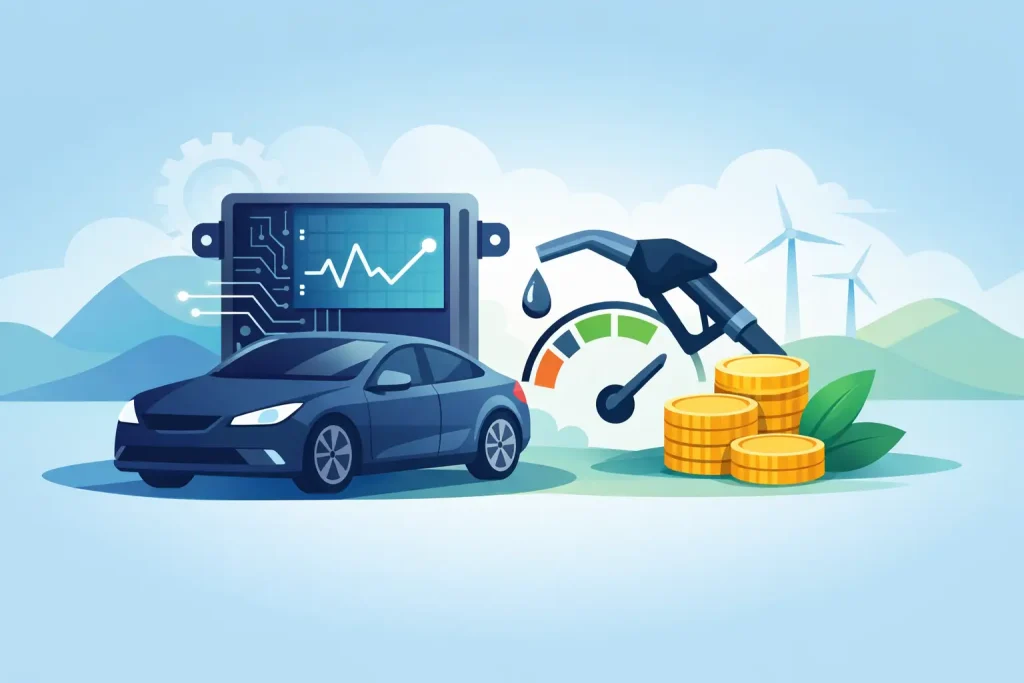
You feel it every time you fill up. Diesel is not cheap, and if your car, van or 4×4 is drinking more than it should, the question comes up fast – does remapping improve fuel economy, or is that just sales talk?
The honest answer is yes, it can. But not every remap saves fuel, and not every driver sees the same result. If anyone tells you remapping automatically turns every vehicle into an economy hero, they are overselling it. A proper ECU remap can improve fuel economy in the right vehicle, with the right setup, driven in the right way. That is the real answer.
Does remapping improve fuel economy in real-world driving?
In a lot of cases, yes. A well-written remap can make the engine produce more usable torque lower down the rev range. That matters because the vehicle does not have to work as hard to get moving or hold speed. You use less throttle, the engine feels less strained, and the car often becomes easier to drive smoothly.
This is why many diesel owners notice the biggest gains. Diesel engines respond well to careful calibration changes, especially where the factory map is conservative. Manufacturers often leave a big safety margin in the software to cover different markets, fuel quality, emissions targets and service intervals. A remap can tighten that up and make the engine run more efficiently in day-to-day use.
For motorway drivers, tradespeople doing long runs, and van owners carrying tools every day, that extra torque can be useful. Instead of dropping a gear and pushing harder every time you hit a hill or try to overtake, the engine pulls better from lower revs. Less effort can mean less fuel used.
Why a remap can reduce fuel use
The key is not magic. It is efficiency.
A remap changes how the ECU controls fuelling, boost pressure, throttle response and torque delivery. Done properly, those changes can help the engine burn fuel more effectively for the job you are asking it to do. If the engine makes stronger torque earlier, you spend less time revving it out. If the throttle response is cleaner, you are not constantly stabbing at the pedal to get moving. If the gearbox, where applicable, works better with the new torque curve, the whole vehicle settles down into a more relaxed drive.
That is where economy gains usually come from. Not from pouring in less fuel at all times, but from needing less effort to maintain the same progress.
On diesel vehicles, especially heavier ones, this can make a clear difference. A van that feels lazy in standard form often gets driven harder just to keep up with traffic. After a sensible remap, it can do the same work with less fuss. That is where fuel savings start to show.
When remapping will not improve fuel economy
This is the bit plenty of people leave out.
If you get the remap and then spend the next month enjoying the extra power every time the lights go green, your fuel economy may get worse. The power is there, the torque is stronger, and it is easy to use more of it. Remapping gives the engine more potential. What happens next depends a lot on your right foot.
The same goes for vehicles with underlying faults. If you have a bad MAF sensor, sticky EGR valve, boost leak, clogged intake, worn injectors, DPF issues or AdBlue-related running problems, a remap is not a miracle cure for poor economy. If the vehicle is already struggling, fuelling badly or dropping into limp mode, you need the fault sorted properly first.
A badly written remap can also hurt economy. Some files are built to impress on the first drive – sharp throttle, big torque hit, lots of smoke, plenty of talk. That is not the same as a clean, balanced calibration. No patch jobs, no guesswork. If the map is crude, the car might feel quicker while actually using more fuel and putting more stress on components.
Does remapping improve fuel economy more on diesel than petrol?
Usually, yes.
Diesel engines tend to offer more noticeable economy gains from remapping because they already work on strong low-down torque and leaner combustion. When the software is optimised properly, there is often more room to improve drivability and reduce the need for heavy throttle input.
Petrol cars can still benefit, but the gains are often smaller unless the factory map is especially restricted or the vehicle is turbocharged. Naturally aspirated petrol engines do not usually deliver the same sort of real-world economy improvements people expect from a diesel remap.
That does not make petrol remapping pointless. It just means the result is more often about sharper response and better driveability than serious fuel savings.
Driving style changes everything
If you want the straight truth about fuel economy after remapping, this is it – software matters, but driving style matters just as much.
A remapped vehicle often feels stronger and smoother at lower revs. If you use that properly, short-shift a bit earlier, stop over-revving, and let the torque do the work, you can save fuel. If you use the extra performance all the time, you probably will not.
This is why two drivers with the same van can report completely different results. One says the remap saved him money every week. The other says it made no difference. Often, the map is not the whole story. The way the vehicle is driven after the remap is what decides the result.
For business users, that matters. If you are covering miles every day, even a modest improvement can add up over months. If your vehicle spends its life on short cold trips in traffic, the gain may be smaller.
The vehicles most likely to benefit
Heavier diesel vehicles often see the clearest improvement. Vans, SUVs, pickups and working 4x4s usually have more to gain from stronger low-end torque because they carry weight and spend a lot of time under load. A remap that helps them pull cleanly without constant throttle can make everyday driving cheaper and easier.
Modern turbo diesels are usually strong candidates too, especially where the factory tune feels flat or strangled. Company fleet vehicles and owner-driven vans can both benefit if they are in good health and doing steady mileage.
Where people get disappointed is expecting miracles from a vehicle with faults, poor servicing or the wrong usage pattern. If the car is neglected, overloaded, running cheap mismatched tyres and crawling around town all day, software alone will not rewrite physics.
Fuel economy is not just about the remap
If your goal is to spend less at the pump, the remap should be part of a bigger picture.
Tyre pressures, service history, air filter condition, injector health, wheel alignment and driving habits all affect economy. So do emissions-related faults. A diesel with AdBlue issues, sensor faults or limp mode problems is often nowhere near its best. Get those sorted first, then look at optimisation.
That is why proper diagnostics matter. Good tuning starts with a healthy vehicle. If there is a fault causing poor combustion or restricted performance, it needs dealing with before anyone talks about better fuel economy. Otherwise you are building on a bad base.
What should you expect from a good remap?
Expect the vehicle to feel easier to drive. Expect stronger pull from lower revs. Expect fewer downshifts, less strain, and in many cases, better fuel economy if you drive with a bit of sense.
Do not expect every journey to suddenly cost half as much. Real gains tend to be sensible rather than dramatic. The win is often that the vehicle does its job better while using less effort to do it.
For many drivers, that is enough. Better response, more usable power, and fuel savings that build over time is a solid result. For van owners and diesel drivers covering serious mileage, it can make genuine financial sense.
At Bolt Remaps, that is the whole point – real-world results, not fairy tales. If the vehicle is right and the map is done properly, fuel economy can improve. If it is not the right fit, you should be told that plainly.
The smart move is to look at your vehicle, how you use it, and what problem you are actually trying to solve. If you want a diesel that pulls better, drives cleaner and has a fair shot at using less fuel, a proper remap is worth a serious look.