P20EE SCR Efficiency Below Threshold: What It Really Means
Warnings and symptoms · Published
P20EE says the SCR catalyst is not cleaning the exhaust well enough. The catalyst is rarely the real problem, and here is how the true cause gets found.
In short
- P20EE means the system is not cutting NOx as much as the engine computer expects.
- The usual causes are a blocked or leaking dosing injector, poor fluid, a drifting NOx sensor or an exhaust leak.
- Replacing the catalyst first is usually the wrong move and can be a costly mistake.
- Live data shows which part is at fault, so a proper diagnosis comes before any parts.
What the code means in plain words
P20EE is a fault code that reads "SCR NOx catalyst efficiency below threshold". That sounds technical, but the idea is simple.
Your diesel makes a gas called NOx. The SCR system sprays AdBlue into the exhaust, and the catalyst uses it to turn most of that gas into harmless nitrogen and water. Two NOx sensors measure the gas before and after the catalyst.
If the reading after the catalyst is higher than the computer expects, it decides the clean-up is not good enough. It then stores P20EE and may light the dashboard warning.
The code tells you the result is poor. It does not tell you why. That is the part that needs finding.
What you may notice
Often the first sign is an engine warning light or an AdBlue message. Some vehicles start a countdown. Some drop into reduced power after a set distance.
You may also see no change in how the vehicle drives at first. That is why the fault can sit unnoticed until the message appears. Do not wait for the countdown to run low.
The real causes
Most cases come down to one of these. Several can be present at once.
A blocked or leaking dosing injector
The injector sprays AdBlue into the exhaust. If it is blocked with crystals, it delivers too little. If it leaks, the spray pattern is wrong. Either way the catalyst does not get the fluid it needs.
Poor or weak fluid
Old, diluted or contaminated AdBlue cannot do its job. Water, a cheap unknown top-up or fluid stored badly can all reduce how well the system works.
A drifting NOx sensor
These sensors work in hot, dirty conditions and wear with age. A sensor that reads too high after the catalyst makes a healthy system look poor. Replacement is often the right answer, but only once the readings prove it.
An exhaust leak
A leak near the sensors lets outside air in, which upsets the readings. It can also let gas escape before it is treated.
Upstream engine problems
If the engine makes far more NOx than normal, the system struggles to keep up. Faults with the EGR valve or the particulate filter are common examples. Fixing the SCR side alone will not help in that case.
The catalyst itself
A tired or damaged catalyst is possible, but it is the rare answer. It is usually the last thing left once everything else has been checked and ruled out.
Why replacing the catalyst first is usually wrong
The catalyst is the biggest and most expensive part in the system, so it is tempting to blame it. In practice it is seldom the cause.
If the injector is blocked, a new catalyst gets the same starved supply and fails the same test. If the sensor is reading wrongly, a new catalyst changes nothing at all. You pay for a large part and the code comes straight back.
A sensible repair works from the cheap and likely causes towards the costly and unlikely ones. That order protects your money.
How it is diagnosed with live data
Proper diagnosis means connecting equipment that can read the SCR system, not just the engine. A basic code reader will show P20EE but cannot tell you the reason.
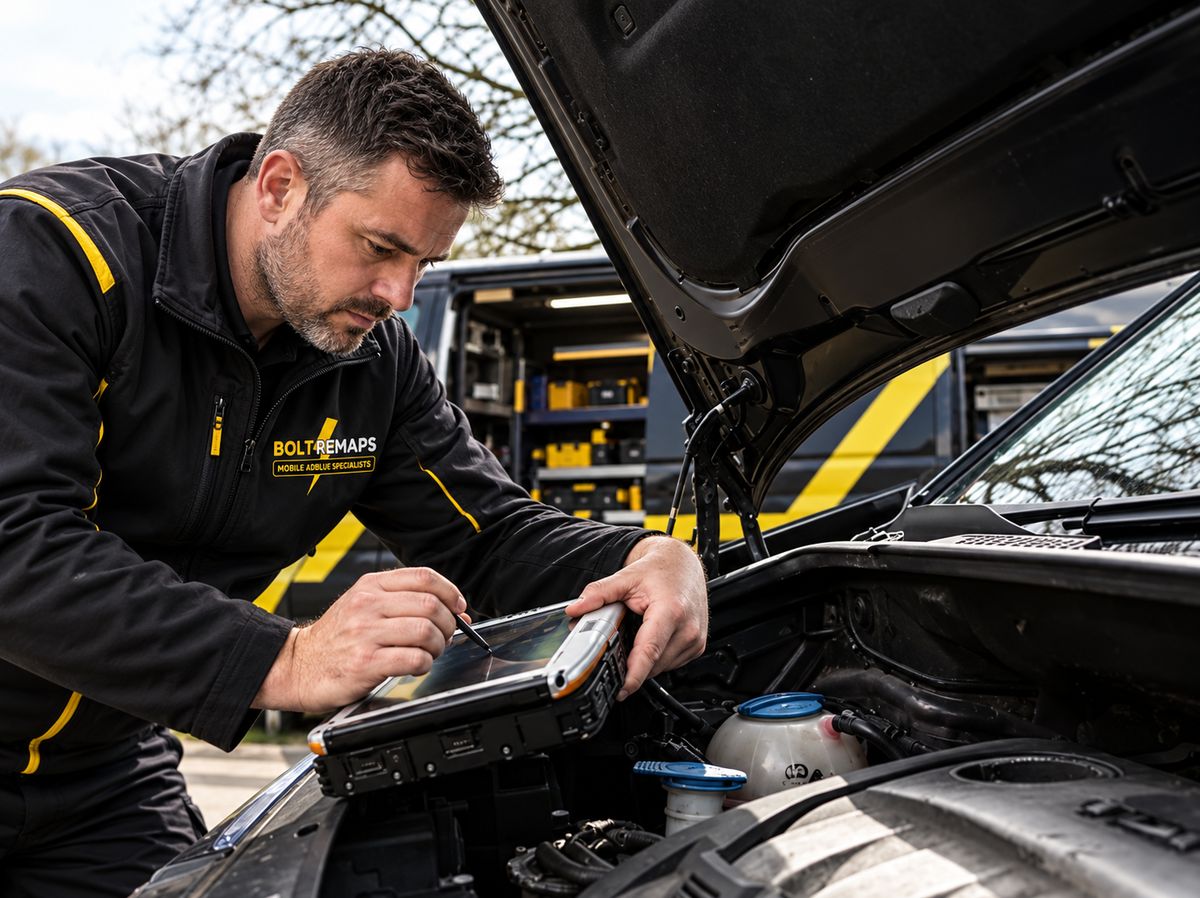
With live data we can watch the system as it works. We compare the NOx readings before and after the catalyst. We check how much fluid the system commands and whether the injector actually delivers it. We look at fluid quality, exhaust temperature and any related engine faults.
Read the stored data
Codes and freeze-frame data show the conditions when the fault was logged, including related codes that point towards the cause.
Test the dosing
The injector is checked for a proper spray and for crystal build-up. A weak spray is a clear sign of a blocked or worn unit.
Compare the sensors
Both NOx sensors should agree sensibly when the system is cold and not dosing. If they do not, one of them is drifting.
Check the surroundings
We look for exhaust leaks, fluid quality problems and engine faults that push the NOx level up before the catalyst ever sees it.
What to do now
Use the right AdBlue and keep the tank topped up. Do not clear the code and carry on, because it will return and a countdown may still be running.
Never try to switch off or bypass the AdBlue system to get rid of the light. That is illegal in the UK and it will fail an emissions check. The safe route is a proper repair.
When to call us
Bolt Remaps has fixed AdBlue faults since 2019, and we are IMI affiliated. We are fully mobile, so we diagnose at your home, workplace or roadside. Lines are open 6am to 9pm, seven days a week, bank holidays included.
We find the true cause first, then agree a fixed price with you before any work begins. Jobs start from £249, there is no fix no fee on the agreed outcome and you get a written warranty. Call 0203 038 8555.
Common questions
What does P20EE mean?
It means the SCR catalyst is not reducing NOx as well as the engine computer expects. It is a result, not a cause, so the reason still has to be found.
Can I keep driving with P20EE?
Usually for a while, but a countdown may be running and reduced power can follow. Get it checked early rather than waiting for the distance to run low.
Do I need a new catalyst for P20EE?
Rarely. A blocked injector, poor fluid, a drifting NOx sensor or an exhaust leak is far more likely. The catalyst should only be blamed once those are ruled out.
Can bad AdBlue cause P20EE?
Yes. Diluted, old or contaminated fluid cannot clean the exhaust properly. If you topped up with something unknown, tell whoever diagnoses the vehicle.
Will clearing the code fix it?
No. If the cause is still there the code returns once the system runs its checks again. Clearing it also hides useful information from the next diagnosis.
Can a mobile technician fix P20EE at my home?
In most cases, yes. Diagnosis, injector work and NOx sensor replacement can all be done on your drive or at your workplace. Call 0203 038 8555 to book.